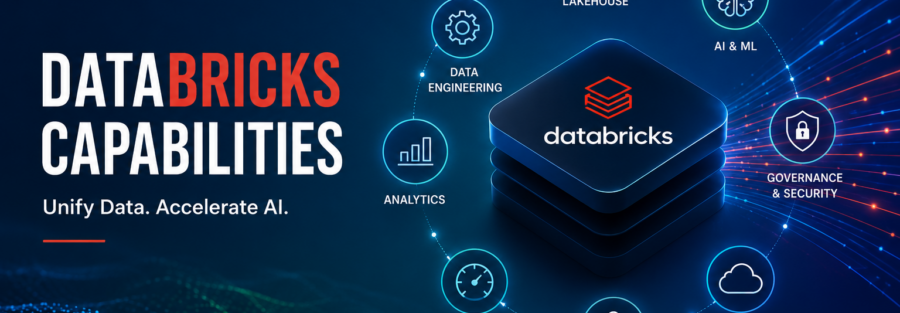
In today’s data-driven world, organisations generate enormous volumes of structured and unstructured data every day. Transforming this data into actionable insights requires a platform that is scalable, secure, and built for modern analytics and artificial intelligence. This is where Databricks stands out.
Databricks is a unified Data Intelligence Platform that combines data engineering, analytics, machine learning, and AI into a single collaborative environment. Built on Apache Spark, it enables businesses to process massive datasets efficiently while accelerating innovation.
What is Databricks?
Databricks is a cloud-based platform designed to simplify data management and AI development. It brings together data engineers, analysts, data scientists, and business teams on one platform, eliminating data silos while improving collaboration.
Unlike traditional data platforms that separate storage, analytics, and AI, Databricks provides everything within a single integrated ecosystem.
Key Databricks Capabilities
1. Unified Lakehouse Architecture
The Lakehouse Architecture combines the flexibility of data lakes with the performance of data warehouses.
Benefits- Store structured and unstructured data together
- Reduce duplicate data storage
- Improve scalability and performance
- Lower infrastructure costs
- Support BI, analytics, and AI workloads
2. Scalable Data Engineering
Databricks uses Apache Spark for large-scale distributed data processing, allowing organisations to process terabytes or petabytes of data efficiently.
Features- ETL and ELT pipeline development
- Batch processing
- Real-time streaming
- Pipeline automation
- Distributed computing
3. Advanced Analytics
Databricks SQL enables analysts to query massive datasets while creating interactive dashboards and reports.
Capabilities- Interactive SQL
- Business Intelligence integration
- Visual dashboards
- Fast query performance
- Self-service analytics
4. Machine Learning with MLflow
MLflow simplifies the complete machine learning lifecycle from experimentation to deployment.
MLflow Features- Experiment tracking
- Model versioning
- Model Registry
- Deployment automation
- Model monitoring
5. Generative AI with Mosaic AI
Databricks provides Mosaic AI to help organisations build enterprise-grade AI applications and Large Language Models (LLMs).
Mosaic AI Capabilities- LLM development
- Model fine-tuning
- Prompt engineering
- Retrieval-Augmented Generation (RAG)
- AI Agent development
- Secure enterprise deployment
6. Real-Time Data Processing
Databricks enables organisations to process streaming data using Delta Live Tables and Structured Streaming.
Use Cases- Fraud detection
- IoT analytics
- Financial transactions
- Customer behaviour analysis
- Operational monitoring
7. Data Governance with Unity Catalog
Unity Catalog provides centralised governance and security across the entire data platform.
Key Features- Role-based access control
- Data lineage
- Audit logging
- Compliance management
- Data discovery
8. Collaborative Workspace
Databricks provides collaborative notebooks where data engineers, analysts, and data scientists can work together seamlessly.
Teams Supported- Data Engineers
- Data Scientists
- Machine Learning Engineers
- Business Analysts
- Data Analysts
9. Automated Workflows
Databricks Workflows automate repetitive processes and simplify pipeline orchestration.
- Job scheduling
- Dependency management
- Pipeline monitoring
- Error handling
- Notifications
10. Multi-Cloud Support
Databricks is available across all leading cloud providers.
- Amazon Web Services (AWS)
- Microsoft Azure
- Google Cloud Platform (GCP)
AI and Data Intelligence
Databricks has evolved into a complete AI platform with enterprise-ready capabilities.
- Foundation Models
- Vector Search
- AI Agents
- Retrieval-Augmented Generation (RAG)
- Enterprise AI Governance
- AI-powered Data Discovery
Security and Compliance
Enterprise-grade security ensures data remains protected throughout its lifecycle.
- Identity and Access Management (IAM)
- Role-Based Access Control (RBAC)
- Data Encryption
- Audit Logging
- Private Networking
- GDPR, HIPAA, SOC 2, and ISO compliance
Business Benefits of Databricks
- Faster data processing
- Improved collaboration
- Reduced infrastructure costs
- Accelerated AI development
- Centralised governance
- Highly scalable architecture
- Real-time business insights
Industries Using Databricks
- Banking and Financial Services
- Healthcare and Life Sciences
- Retail and E-commerce
- Manufacturing
- Telecommunications
- Energy and Utilities
- Insurance
- Media and Entertainment
Why Choose Databricks?
Databricks unifies data engineering, analytics, governance, and artificial intelligence into one platform. Instead of managing multiple disconnected technologies, organisations can build complete data and AI solutions in a single ecosystem.
- Accelerate digital transformation
- Build production-ready AI applications
- Improve operational efficiency
- Enable real-time decision-making
- Strengthen enterprise governance
- Reduce operational complexity
Final Thoughts
As organisations continue to embrace AI and data-driven decision-making, having a unified platform becomes increasingly important. Databricks combines data engineering, analytics, governance, machine learning, and Generative AI into a collaborative environment that helps organisations innovate faster and unlock greater value from their data.
Whether you’re modernising your data infrastructure, implementing machine learning, or building enterprise AI applications, Databricks provides the scalability, intelligence, and flexibility required for long-term success.